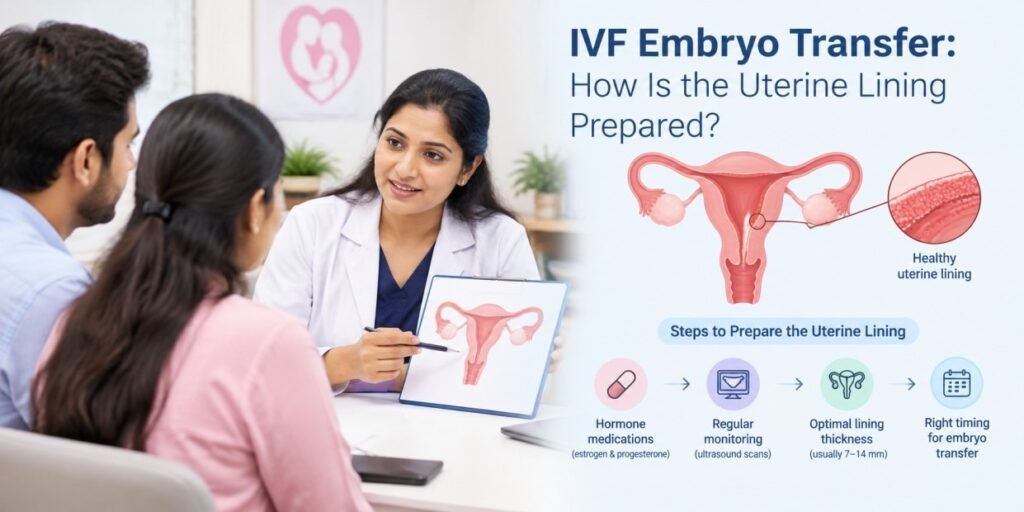
Preparing the uterus is an important step before an embryo is transferred during IVF treatment. The uterine lining must be ready at the right time so that the embryo has a suitable place to attach and begin developing.
Many couples have questions about this process. How thick should the uterine lining be? Why are hormone medicines given? How does the doctor decide the correct day for embryo transfer?
Understanding these steps can help reduce confusion and make the IVF journey easier to follow.
For couples exploring Infertility Treatment in Nashik, this guide explains how the uterine lining develops, how doctors monitor it, and how the timing of embryo transfer is planned.
What Is the Uterine Lining?
The uterine lining, also called the endometrium, is the soft inner layer of the uterus.
During a natural menstrual cycle, this lining changes under the influence of hormones. It grows and prepares for a possible pregnancy.
If an embryo reaches the uterus at the right time, it may attach to the lining. This process is called implantation.
During IVF, fertilisation takes place in a laboratory. The embryo is then transferred into the uterus when the lining and embryo are appropriately prepared.
The aim is to create suitable conditions for implantation, although a well-prepared lining cannot guarantee pregnancy.
Why Is Uterine Lining Preparation Important in IVF?
In IVF, the timing of embryo transfer matters. The embryo and the uterine lining need to be at the right stages of development.
If the lining is too thin, its appearance is not suitable, or the timing is not synchronised with the embryo, the fertility specialist may need to investigate further or adjust the treatment plan.
- Uterine lining preparation helps the doctor assess:
- The thickness of the endometrium
- The appearance of the lining on ultrasound
- The timing of progesterone exposure
- Whether the uterus is ready for the planned embryo transfer
For couples considering Infertility Treatment in Nashik, understanding this step can help explain why embryo transfer may not happen immediately after the embryo is created.
How Is the Uterine Lining Prepared?
The preparation process depends on the type of IVF cycle and the patient’s medical history.
In a frozen embryo transfer cycle, doctors may use hormones to prepare the lining before transferring a previously frozen embryo.
Step 1: Initial assessment
The doctor reviews the patient’s menstrual history, previous treatment, ultrasound findings, and other relevant medical information.
An ultrasound may be performed to assess the uterus and lining before treatment begins.
Step 2: Oestrogen medication
In a medicated frozen embryo transfer cycle, oestrogen may be prescribed to help the uterine lining grow.
The medicine may be given as tablets, patches, or another suitable form, depending on the treatment plan.
The duration varies. Some patients need a shorter preparation period, while others need more time.
Step 3: Ultrasound monitoring
The doctor checks the lining with ultrasound to assess its thickness and appearance.
The response to medication differs from person to person, so the treatment may be adjusted according to the findings.
Step 4: Progesterone medication
When the lining is considered ready, progesterone is started according to the clinic’s protocol.
Progesterone changes the lining so that it becomes suitable for the next stage of development.
The timing of progesterone is especially important because it must be matched to the developmental stage of the embryo.
Step 5: Planning embryo transfer
Once the lining and hormone timing are appropriate, the clinic schedules the embryo transfer.
The doctor explains the date, medication schedule, and instructions to follow before the procedure.
What Is the Ideal Thickness of the Uterine Lining?
One of the most common questions patients ask is how thick the lining should be before embryo transfer.
A lining measuring around 7–10 mm is often considered favourable in many IVF settings. However, there is no single thickness that guarantees success, and pregnancy can occur with thinner linings too.
The doctor considers more than just the number on the ultrasound report.
Important factors include:
- Endometrial thickness
- Lining appearance and pattern
- Hormone levels when relevant
- The timing of progesterone
- The patient’s previous treatment and medical history
For example, a lining measuring 9 mm may be considered suitable in an appropriate clinical setting, but thickness alone cannot predict whether implantation will happen.
An Infertility Doctor in Nashik can explain what your ultrasound results mean and whether any changes to your treatment plan are needed.
Why Are Blood Flow and Lining Quality Important?
The uterine lining needs to respond to hormones and develop appropriately before embryo transfer.
Doctors may assess its appearance through ultrasound. In selected cases, additional evaluation may be considered if there are concerns about the uterine cavity or lining.
Blood flow can also be assessed in certain situations, but there is no single blood-flow measurement that guarantees successful implantation.
If the lining does not develop as expected, the doctor may review possible reasons, such as:
- An insufficient response to hormone medication
- Previous uterine procedures or scarring
- Conditions affecting the uterus
- Problems with the treatment timing
- Other medical factors that need further assessment
The next step depends on the cause. Sometimes the medication or timing can be adjusted; in other cases, further testing may be helpful.
The goal is to make a safe, evidence-based decision rather than relying on one measurement alone.
How Is Embryo Transfer Timing Planned?
Embryo transfer is not scheduled only according to the thickness of the uterine lining. The developmental stage of the embryo and the duration of progesterone exposure are also important.
For example, a day-five blastocyst is an embryo that has developed for about five days after fertilisation.
In a programmed frozen embryo transfer cycle, the doctor plans the transfer according to the treatment protocol and the time progesterone has been given.
The exact schedule can differ between patients and clinics.
Why does timing matter?
The uterine lining passes through different stages as it responds to hormones. The embryo also develops over time.
The doctor aims to synchronise these stages so that the embryo reaches the uterus when the lining is appropriately prepared.
This is why patients are advised to take medicines at the prescribed times and avoid changing the schedule without consulting their fertility team.
For people seeking Infertility Treatment in Nashik, understanding the importance of timing can make the preparation process clearer.
What Happens on Embryo Transfer Day?
Once the uterine lining is ready and the transfer timing is confirmed, the procedure can be scheduled.
Here is what generally happens.
Step 1: Final checks
Step 2: Embryo preparation
Step 3: Embryo transfer
Step 4: Aftercare instructions
The doctor explains which medicines to continue, what activities are appropriate, and when pregnancy testing should be performed.
Embryo transfer is generally a short procedure and usually does not require surgery or general anaesthesia.
What If the Uterine Lining Is Not Ready?
Sometimes the lining does not reach the expected thickness or appearance by the planned date.
This does not automatically mean that IVF will fail.
The fertility specialist may review the ultrasound findings, medication response, hormone levels when appropriate, and any previous problems with the uterus.
Depending on the situation, the doctor may:
- Continue or adjust the preparation period
- Review the type or dose of medication
- Investigate possible uterine conditions
- Recommend additional tests if needed
- Postpone the embryo transfer when clinically appropriate
- In some cases, allowing more time or changing the treatment plan may be the safest choice.
- It is better to understand the reason for a delay than to proceed without appropriate assessment.
- An Infertility Specialist in Nashik can guide patients through these decisions based on their individual findings.
Tips to Follow Before Embryo Transfer
Preparing for embryo transfer involves following the treatment plan carefully. You do not need to make major lifestyle changes without medical advice.
Here are some useful tips:
- Take oestrogen, progesterone, and other prescribed medicines exactly as directed.
- Attend scheduled ultrasound and blood-test appointments.
- Inform your doctor if you miss a dose.
- Eat balanced meals and stay hydrated.
- Avoid smoking and alcohol.
- Ask your doctor before starting new medicines or supplements.
- Discuss travel plans or strenuous activities if you have concerns.
- Do not stop prescribed hormone support unless your doctor advises you to do so.
Routine bed rest is generally not required after an uncomplicated embryo transfer. Follow your clinic’s instructions for your particular treatment cycle.
Most importantly, remember that preparing the lining is one part of IVF. Embryo quality, age, uterine health, and other factors can also affect pregnancy outcomes.
Frequently Asked Questions
1. How many days does it take to prepare the uterine lining?
2. Is a 9 mm uterine lining good for embryo transfer?
3. Why is progesterone given before embryo transfer?
4. Can embryo transfer happen if the lining is thin?
5. Does a good uterine lining guarantee pregnancy?
6. Can I walk after embryo transfer?
7. When should I take a pregnancy test after embryo transfer?
Conclusion
Preparing the uterine lining is an important part of IVF embryo transfer. The process may involve hormone medicines, ultrasound monitoring, and carefully planned progesterone timing.
The aim is to prepare the lining and synchronise it with the embryo’s development. Although a suitable lining can support implantation, it cannot guarantee pregnancy.
If you are considering Infertility Specialist in Nashik, ask your fertility specialist about your lining thickness, medication schedule, transfer timing, and any additional tests you may need.
Understanding each step can help you feel more confident and prepared throughout your fertility journey.